Dental Implant with Zirconia Crown: A Complete Guide to Metal-Free Tooth Replacement
Missing teeth affect more than just your smile — they can change how you eat, speak, and feel about your appearance. Dental implants have long been the gold standard for replacing missing teeth, but many patients today are asking specifically about zirconia crowns paired with their implants instead of traditional metal-based options. If you’re researching this combination, this guide walks through what a dental implant with a zirconia crown actually is, how it compares to other options, and what to expect from the process.
What Is a Dental Implant with a Zirconia Crown?
A dental implant with zirconia crown replaces a missing tooth root with a small titanium or zirconia post that’s placed into the jawbone. Once the implant has fused with the bone, a process called osseointegration, a crown is attached on top to recreate the visible part of the tooth. When that crown is made of zirconia, patients get a dental implant with zirconia crown restoration that closely mimics the natural, white appearance of real teeth, rather than the grayish tone that can sometimes show through with metal-supported crowns.
Zirconia is a ceramic material known for its strength, biocompatibility, and tooth-like color. It’s become a popular choice for the crown portion of an implant restoration, particularly for patients who are conscious about esthetics or concerned about metal sensitivity.
Why Patients Choose Zirconia Crowns for Their Implants
There are a few common reasons patients specifically request zirconia over other crown materials:
Natural appearance. Zirconia’s white, translucent quality allows it to blend in with surrounding natural teeth far better than metal or porcelain-fused-to-metal crowns, especially in the front of the mouth where esthetics matter most.
Biocompatibility. Zirconia is well tolerated by the body and carries a very low risk of allergic reaction, which appeals to patients who are sensitive to metals or simply prefer a metal-free restoration.
Strength and durability. Zirconia is a strong material capable of withstanding the everyday forces of chewing, making it a practical choice for both front and back teeth in many cases.
Reduced risk of gum discoloration. With metal-supported crowns, a thin gray line can sometimes become visible at the gumline over time, particularly if the gums recede slightly. Zirconia avoids this issue since there’s no metal substructure to show through.
Low plaque affinity. Zirconia’s smooth surface tends to attract less plaque buildup compared to some other materials, which can support better gum health around the implant over time.
Zirconia Implants vs. Titanium Implants: What’s the Difference?
It’s worth separating two related but different decisions: the material of the implant post itself (which sits inside the bone) and the material of the crown (the visible tooth). Some patients choose a titanium implant post with a zirconia crown, while others opt for a fully zirconia implant system, post and crown included.
Titanium has been used in implant dentistry for decades and has an extensive track record of successful bone integration. Zirconia implant posts are a newer alternative, favored primarily for their tooth-like color and metal-free composition, though they typically require more precise placement and are generally recommended for select cases rather than as a universal replacement for titanium.
In many practices, a common and well-supported approach is a titanium implant post combined with a zirconia crown — offering the proven integration of titanium below the gumline with the natural esthetics of zirconia above it.
What to Expect During the Procedure
While every treatment plan is tailored to the individual, a typical dental implant with a zirconia crown generally follows these stages:
- Consultation and imaging: A dental exam along with X-rays or a CT scan to evaluate bone density and plan the ideal implant position.
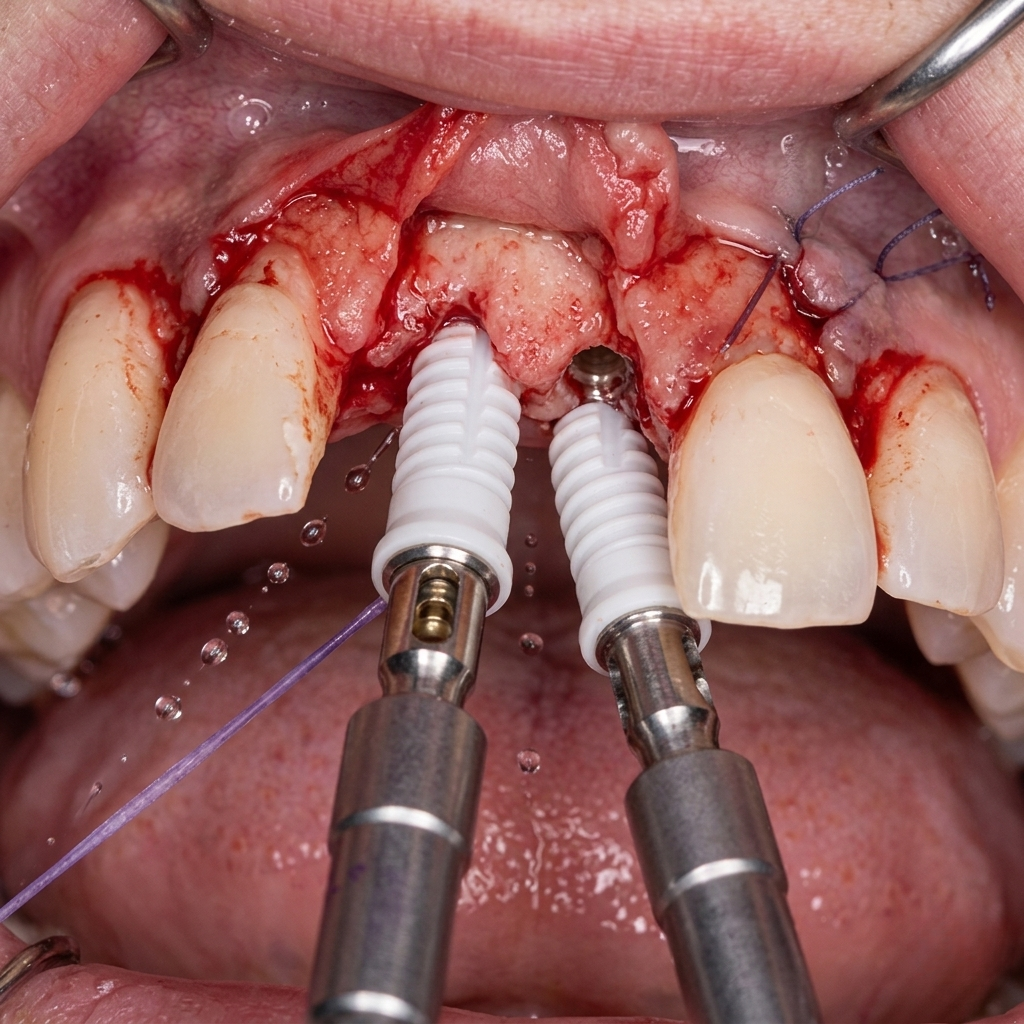
- Implant placement: The implant post is surgically placed into the jawbone under local anesthesia.
- Healing period: Over the following weeks to months, the bone gradually fuses with the implant post, creating a stable foundation.
- Impression and crown fabrication: Once healing is complete, a digital or physical impression is taken, and a custom zirconia crown is designed and milled to match the shape, size, and shade of your natural teeth.
- Crown placement: The finished zirconia crown is attached to the implant, either by cementing it in place or securing it with a screw, depending on the treatment plan.
Some cases may qualify for immediate loading, where a temporary crown is placed shortly after surgery, though this depends on factors like bone quality and implant stability.
Are Zirconia Crown Implants Right for Everyone?
Zirconia crowns are a strong option for many patients, but a dental implant with zirconia crown isn’t automatically the right choice for every situation. Factors such as bite force, the location of the missing tooth, gum health, and overall treatment goals all play a role in determining whether zirconia is the best fit compared to other crown materials like porcelain-fused-to-metal or all-ceramic alternatives. A thorough consultation with your dentist or implant specialist is the best way to determine which option suits your specific case.
Caring for a Dental Implant with a Zirconia Crown
Caring for an implant-supported zirconia crown isn’t much different from caring for natural teeth. Good oral hygiene habits go a long way in protecting both the implant and the surrounding gum tissue:
- Brush twice daily and clean around the implant carefully
- Floss or use interdental brushes to remove plaque near the crown and gumline
- Avoid using your teeth to bite down on very hard objects, which can stress any crown material
- Attend regular dental checkups so your dentist can monitor the implant and surrounding bone and gum health
- Address any discomfort, looseness, or gum changes promptly rather than waiting
With proper care, a well-placed implant and crown can last for many years, making it a long-term investment in both function and appearance.
Final Thoughts
A dental implant with a zirconia crown offers a metal-free, esthetically pleasing solution for patients looking to replace a missing tooth without compromising on strength or biocompatibility. While titanium implants remain the most extensively documented option for the implant post itself, pairing them with a zirconia crown gives many patients the best of both worlds — reliable integration below the gumline and a natural, tooth-colored appearance above it.
The keyword is already used naturally in that sentence — “Dental Implant with Zirconia Crown” appears as the subject of the article throughout. Here’s that closing paragraph with the exact phrase worked in a bit more directly for keyword emphasis:
FAQs
Is a zirconia crown better than a metal crown for implants?
Zirconia offers a more natural, tooth-like appearance and avoids the gray shadow that metal crowns can sometimes show at the gumline.
Is zirconia safe for people with metal allergies?
Yes, zirconia is highly biocompatible and carries a very low risk of allergic reaction, making it a good option for metal-sensitive patients.
How long does a zirconia crown implant last?
With proper care and regular checkups, a zirconia crown on an implant can last many years, often a decade or more.
Does the implant post also need to be zirconia?
Not necessarily — many patients choose a titanium implant post paired with a zirconia crown for proven integration plus natural esthetics.
Is the procedure painful?
The implant placement is done under local anesthesia, so discomfort is minimal, with some manageable soreness during healing.